When you buy through links on our internet site , we may earn an affiliate commission . Here ’s how it works .
It does n’t lie in or cheat , but one desert animal has no job slip from its unwitting neighbour .
The pocket shiner , a tiny nocturnal rodent , survives by sneaking into neighbors ' dens and purloin seeds from their food stores , allot to a study in this month ’s issue of theAmerican Naturalist .
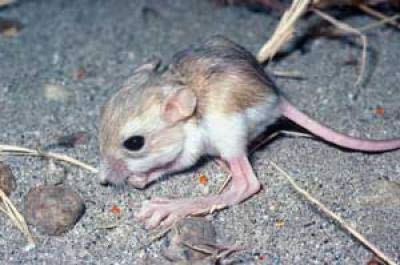
A twenty-seven day old desert kangaroo rat, Dipdomys deserti, learning how to use its cheek pouches to store food.
" We might think of premeditated stealing as something uniquely human , but this shows it also subsist in certain species , " said work drawing card Mary Price , a investigator at the University of California , Riverside and the University of Arizona .
Before she made the discovery , Price , who spend more than 20 year analyze desert gnawer communities , could n’t empathise how several rodent species co - exist in an area with scant resources and yet none out - vie the others .
It turns out some were n’t play fair .

Pocket mice steal from their bigger , faster cousins , the kangaroo rats , which are very good at bounding around on their hind leg and collect semen . After the plants have dropped all their seeds and the frenetic scramble for them is over , the kangaroo rats put in what they ’ve gather in caches , from which they feed the eternal sleep of the year .
The tiny air hole mouse are expert at finding and making off with stored seeds .
This kind of parasitic relationship has been observed in just a few other animal communities , though Price say she suspects it might be more widespread . She hop the new research will help scientists understand similar fundamental interaction among other animal . She also check a broader lotion of the finding .

" We ca n’t maintain biodiversity if we do n’t empathise the processes that maintain it , " she said .


