When you purchase through links on our internet site , we may realise an affiliate mission . Here ’s how it work .
The ancient Egyptians are known for their lush and complex burials . Over the centuries , archaeologists have found a salmagundi of grievous goods and decorations that were included in these millennia - old grave . Here are 13 sober goods that keep turn up in Egyptian burial , including shabti figurines , meant to work for the deceased in the afterlife , and mummy portraits that pop the question pictorial pictures of the dead .
Copies of the “Book of the Dead”
The " Book of the Dead " is a modern - day name return to a serial of texts that the ancient Egyptians sometimes buried with the asleep . They called these texts the " Book of amount Forth by Day , " and the textbook , which were meant to help the dead navigate the afterlife . The content in the different text varied but they often draw what the ancient Egyptians believed could be meet in the afterlife , such as the weighing - of - the - heart ceremonial occasion , in which a someone ’s works were weighed against the feather of the goddess Maat , a deity associated with justice .
Sarcophagi
Ancient Egyptians were sometimes sink in sarcophagi adorn with illustrations . Sometimes , these luxuriant casket have hieroglyphic that name the deceased and provide supplicant for them . Just like forward-looking nesting dolls , sarcophagi could include multiple sarcophagus housed within each other , with the mummified body at the center .
bet on the wealth of the someone , the sarcophagus could be made of expensive material . For example , the sarcophagi ofTutankhamunwere made with big amount of Au .
Mummy portraits
Mummy portraitsshow vivid image of the deceased . illustration painted on wooden panels were created between the middle of the first century and the middle of the third century A.D. , while examples painted on shrouds kept being created through the quaternary century , Susan Walker , an honorary conservator and former keeper of antiquities at the Ashmolean Museum at the University of Oxford , told Live Science in an email .
These portrait were stick on to the mummified remains of the deceased . The usage of mummy portraits was particularly popular in the townspeople and village of the Fayum , although lesson have been found elsewhere in Egypt , Walker pronounce .
Shabti figurines
Shabti ( also known as ushabti ) figurines were meant to work for the at peace in the afterlife . Depending on the grave , a soul could be forget with one C of shabtis . A simple shabti could be made out of ceramic , while more elaborate shabtis were begild with atomic number 79 .
" The figures were typically code with a spell to as if by magic animate them in the afterlife and were depicted with tools in hand and a basket slung over the shoulder , quick to do any undertaking required of the deceased in the afterlife,“Peter Lacovara , director of the Ancient Egyptian Archaeology and Heritage Fund , wrote in his book " The World of Ancient Egypt : A Daily Life Encyclopedia " ( Greenwood Publishing Group , 2016 ) .
Canopic jars
Canopic jar restrain some of the organs of the deceased that were removed during themummificationprocess . Each organ , such as the lung , liver , intestines and stomach , had their own jar according to theMetropolitan Museum of Artin New York City .
The ancient Egyptians considered each harmonium to be protect by one of the four sons of the falcon - headed god Horus . The lung were protect by Hapy ( or Hapi ) , the liver by Imsety , the venter by Duamutef and the intestines by Qebehsenuef , the museum take down . The shock , in turn , were sometimes placed in a canopic chest . A renowned example is from the tomb of Tutankhamun , in which the four jars were placed in an oriental alabaster chest .
Golden tongues
Golden tongue were sometimes bury with Egyptian mom during the Greco - romish period ( 332 B.C. to A.D. 395 ) . The Egyptians may have set the golden tongue in mamma so that they would be able to speak to deities in the hereafter . to boot , the ancient Egyptians believe that the flesh of the idol was made of gold .
Wall paintings
Wall picture sometimes decorated the grave of affluent ancient Egyptians . Artists paint a variety of motifs , including portrait of the deceased , picture of the gods , image of the deceased venerating the gods , and paintings of people mourning the deceased .
Artwork in tomb sometimes also showed images of daily spirit in Egypt , as well as plants , animals and wildlife . They could even feature images of gymnastic event , such as wrestling and saltation . hieroglyph were sometimes absorb next to the wall painting and supply entropy on who was eat up in the tomb and what they did during their life .
Scarab
Amulets in the shape of scarab beetles were sometimes inhume with the deceased in ancient Egypt . " The sacred scarab was believe by the Egyptians to be what moved the sunshine across the sky , much like the scarab beetle moved a clod of dung on the sand,“Gene Kritsky , a professor emeritus of biota at Mount St. Joseph University who has explore andwrittenabout Egyptian scarab amulet , told Live Science in an email .
" Small funerary [ scarab ] amulets were carved on the underside show the beetle ’s legs . Some were carved so accurately that they could be key to species , " Kritsky said . " These scarabs were stitch into the mummy linen , and served as protection for the at peace , " Kritsky noted , adding that grand of scarabs have been recover in Egypt .
Statues
The ancient Egyptians sometimes rate statues in tomb . In some cases , these statue depicted deities . For representative , in January 2024 , archeologist harbinger that they’dfound a statue depict Harpocrates , a childlike Greek god colligate with silence , inside a tomb date to around 2,000 years ago at Saqqara . They may have been placed to demonstrate the religious devotedness of the deceased .
Other time , statues showed the deceased and their families . For example , in April 2023 , archaeologists foretell that they had found a3,300 - year - previous tomb at Saqqarathat belonged to a man name Panehsy . Inside , they found a statue of Panehsy and his household carved in easement .
Jewelry
A wide assortment of jewelry — including necklaces , ring and broach — was bury with the gone in ancient Egypt . The loaded the individual , the more elaborate the jewelry .
For instance , Tutankhamun ’s tomb hold back a large amount of jewellery , including luxuriant pectorals , a type of jewelry that was sometimes placed near a mortal ’s chest . The design of two of the pectorals in the male child king ’s grave were very detailed and included depictions of winged scarab beetle , poppy efflorescence and lunar crescents , Susan Allen , a senior research assimilator at the Metropolitan Museum of Art , wrote in her book " Tutankhamun ’s Tomb : The quiver of Discovery " ( Met Publications , 2006 ) .
Animal mummies
Animal mummies were sometimes include in burial . These could be darling dearie who were bury with their proprietor for the afterlife , Lisa Sabbahy , an associate professor of Egyptology at The American University in Cairo , write in her book " All Things Ancient Egypt : An Encyclopedia of the Ancient Egyptian World " ( Greenwood , 2019 ) .
Sometimes , remains of animals — such as cows , ducks and geese — were " fain so that they were quick to be make " and then mummified , Sabbahy wrote . These remains would be for the grave owner , and possibly their positron emission tomography , to eat up in the hereafter , she noted .
Mummy masks
The deceased were sometimes forget with mummy masks on their faces . The masquerade show an " idealise images of the deceased , " according to theMuseum of Fine Arts , Boston . They could be made out of adhesive plaster , cartonnage ( a newspaper - mache cloth ) , linen and , on rare occasions , precious metals . In 2018 , archaeologists working at the internet site of Saqqara discovereda silver mummy mask gilded with gold . It belonged to a priest who serve Mut , a sky goddess .
Boat models
— When did the Egyptians begin using hieroglyphs ?
— When did the ancient Egyptians first dry up their dead ?
— 3,500 - year - quondam burial of Nubian woman divulge 1 of globe ’s other be intimate cases of arthritic arthritis

An Egyptian mummy portrait of a young man, circa the third century A.D.
Archaeologists have also found wooden models of boats in ancient Egyptian tombs . One notable example is from the tomb of Djehutynakht , a governor who lived around 4,000 years ago and was buried with 55 model gravy boat in his grave at the site of Deir el - Bersha , fit in to theMuseum of Fine Arts , Boston . These include boats for troop or lading raptus and boat for hunting and fishing . One of the boats is shown transporting what appears to have been the ma of Djehutynakht .

A preserved papyrus of the “Book of the Dead” found in a tomb from dynasty 18, circa 1550 to 1295 B.C.
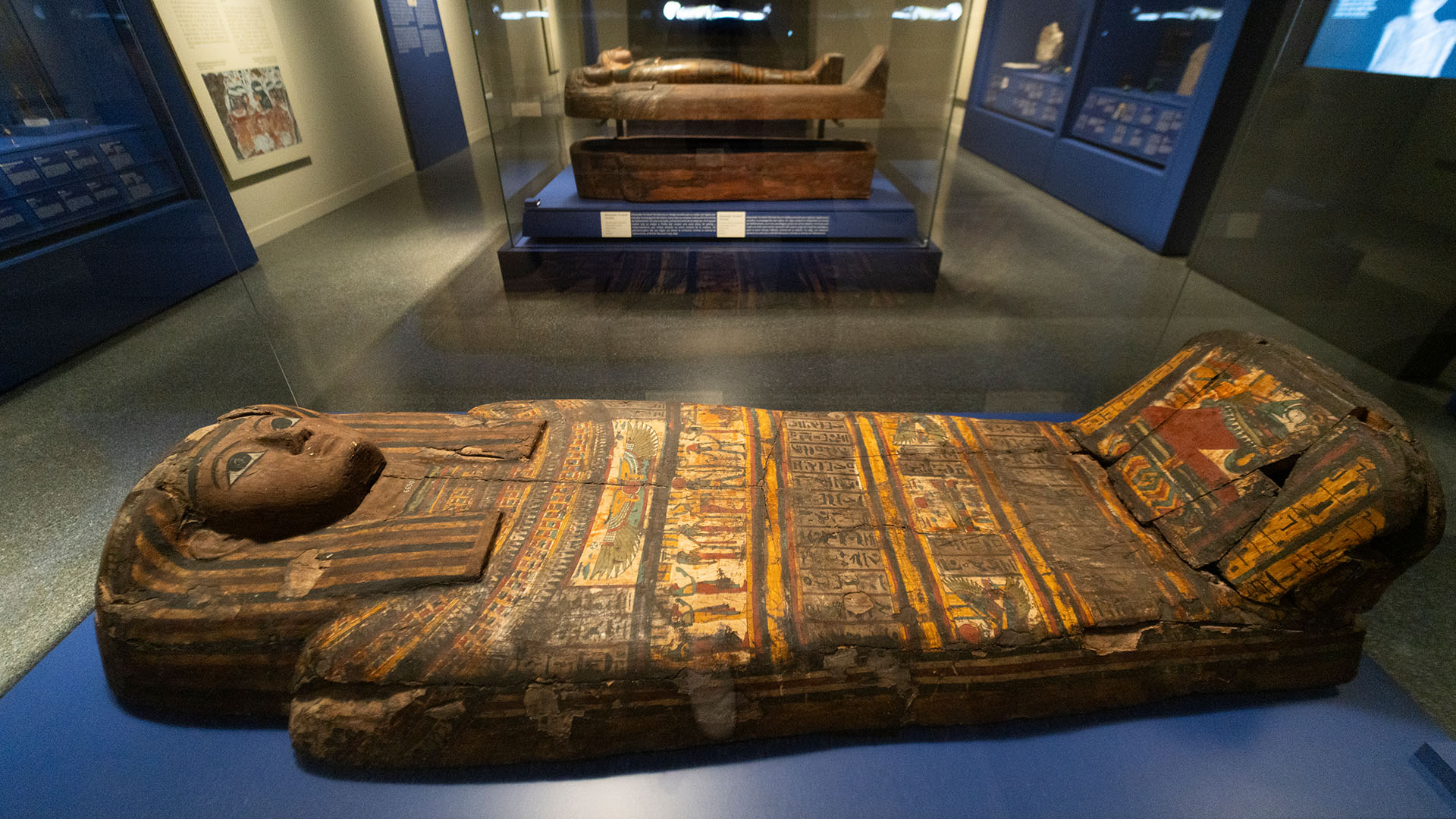
Sarcophagi on display at the exhibit “Mummies of Egypt: Rediscovering Six Lives,” in Valencia, Spain.

A mummy portrait of Artemidorus from Hawara, Egypt, that dates to circa A.D. 100 to 120 during the Egyptian Roman Period. The gold laurels on his head symbolize that he overcame death.

A collection of shabti figurines and a box made from painted wood, limestone and ink that were crafted circa 1279 to 1213 B.C., during dynasty 19.
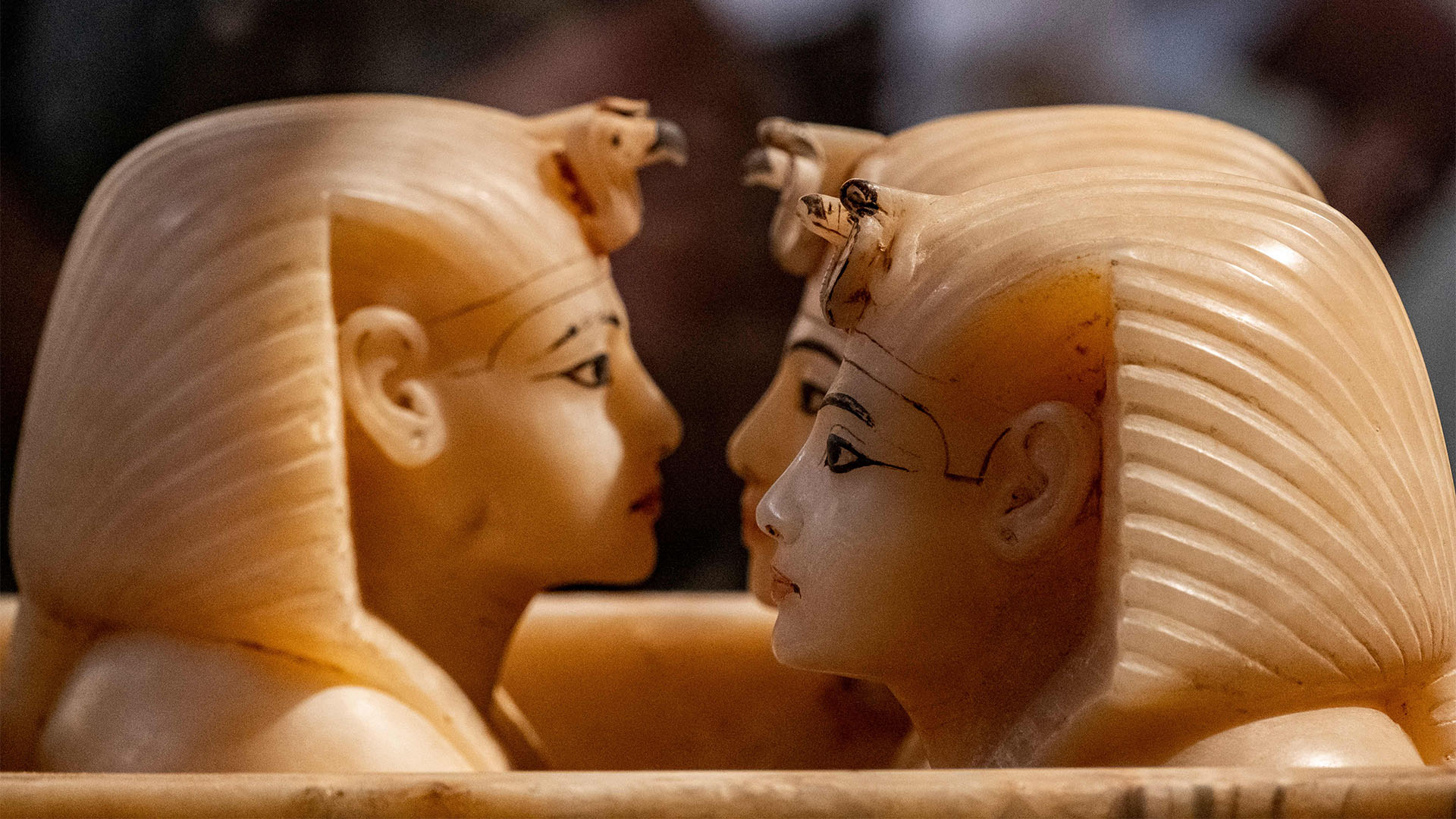
The canopic jars from the tomb of King Tut.

A golden tongue dating to Egypt’s Roman Period.

The colorful paintings inside the tomb of Ramesses VI in the Valley of the Kings in Luxor, Egypt.

A scarab amulet from Egypt’s Ptolemaic dynasty (305 to 30 B.C.).

A rock-cut statue from the Fraser Tombs, a necropolis in the cliffs near Al Minya, Egypt.

An ancient jewelry display at Egypt’s National Museum of Egyptian Civilization.

An ancient cat mummy in a wooden cat sarcophagus, painted with an eye of Horus amulet.

A first century A.D. plaster mummy mask from Minya, Egypt.

A model of a boat from a tomb in Deir el-Bahari, Egypt, that dates to the 11th dynasty, Middle Kingdom (2030 to 1981 B.C.).


